The Primary Healthcare Research and Development Institute was formally established in 2015 in order to carry out scientific and research work in the field of medical sciences and development in the field of primary healthcare.
The main and essential task of the unit is to seek and develop new or additional patient care options.

The Institute deals with the following essential areas:

1. Research and Development

With the help of research, innovations are introduced and existing patient treatment methods are upgraded or improved.

The focus is on:

  • designing new models or approaches to patient care and verification in a clinical setting;
  • accessing new resources and experience in the field of healthcare innovation by verifying their application and scope in a clinical setting;
  • encouraging health research and testing the use of new technologies and information systems, which are extremely important for the development of more effective approaches to patient treatment and care and, in general, to the optimisation of work processes;
  • implementation of optimised models and/or innovative approaches that primarily enable improved quality of patient care and reduced treatment costs;
  • integrating the economic aspects of treatment into projects.

The aim of our activities is to achieve changes in healthcare and, in so doing, to integrate and connect regional, national and global health partners.

2. Simulation Centre 

Since 2014, the Ljubljana Healthcare Centre’s Simulation Centre has operated within primary healthcare as a learning centre at which both professionals and the lay public are trained through advanced simulations in healthcare using state-of-the-art equipment. The aim of the various training programmes is to improve patient safety, to increase the knowledge and skills of professionals and lay people, and to enhance their competences and performance in dealing with certain life-threatening situations.

3. Membership in and Cooperation with International Institutions

The Ljubljana Community Health Centre is the largest primary healthcare institution in Slovenia and is even one of the largest institutions of its kind on a European scale. Our position as a point of reference is enhanced by the visits of various delegations from abroad, to whom the institution’s good practices, organisation and management are presented, along with the working method and content of individual activities.

The Ljubljana Community Health Centre is a member of renowned international organisations, including:

  • The European Association for Quality and Safety in Family Medicine (EQUIP),
  • The European Forum for Primary Health Care (EFPC),
  • The Society in Europe for Simulation Applied to Medicine (SESAM),
  • The International Nursing Association for Clinical Simulation and Learning (INACSL).

With this kind of networking, experience is exchanged and implemented in the domestic environment. 

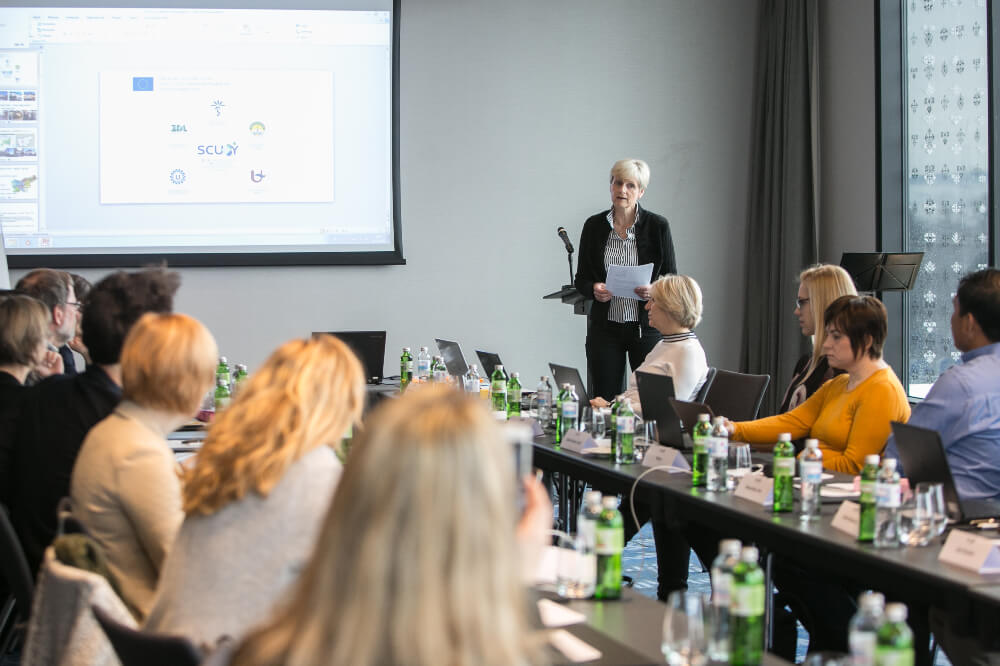
Another key pillar of our international activities is the Regional Vocational Excellence HUB Ljubljana, established in partnership with the Faculty of Health Sciences, University of Ljubljana, as part of the EUVECA European project.

The Regional Vocational Excellence HUB brings together experts and professionals from the health and social care sectors, fostering collaboration and strengthening professional networks. By facilitating knowledge transfer, the exchange of best practices, and the continuous development of professional competencies, the HUB contributes to innovation and excellence in vocational education and training across the region.

4. Project Office

Community Health Centre Ljubljana actively participates in national and international development, research and innovation projects funded through European and other public funding programmes. Through these activities, the organisation contributes to the introduction of innovative solutions, continuous improvement of healthcare services, and the development of new approaches to patient care.

Supporting these activities, the Project Office serves as a central hub for development and implementation of projects. Through professional, administrative, and coordination support. It contributes to the successful delivery of research, development initiatives, and strengthens collaboration with national and international partners.

Contact
Phone: +386 1 555 2598
E-mail: projektna.pisarna@zd-lj.si

Current Projects

CITY MOVE – City based actions to stimulate active Movement for health

Programme: Horizon Europe
Project duration: 2024–2027
Coordinator: University of Antwerp

City Move is an international research project that aims to create healthier urban environments by promoting physical activity and reducing the burden of non-communicable diseases. Working across six cities on three continents. The project brings together researchers, healthcare providers, local authorities, and community partners to develop, implement and evaluate interventions that encourage more active lifestyles. Particularly among less active and vulnerable population groups.

As one of the project partners, Community Health Centre Ljubljana contributes to the design, implementation and evaluation of local interventions. One of these is the CityMove mobile application, developed as an early intervention to encourage adolescents to explore their city on foot through an interactive and engaging experience. Learn more about the project.

EUVECA – European Platform for Vocational Excellence in Health Care

Programme: Erasmus+
Project duration: 2022–2026
Coordinator: Region of Southern Denmark

The future of healthcare requires new knowledge, new competences, and closer collaboration between education and clinical practice. This is the vision behind the EUVECA project, which brings together Regional Centres of Vocational Excellence across Europe to strengthen vocational education and training in healthcare. By fostering cooperation between education providers, healthcare organisations, public authorities and industry, the project promotes innovative learning approaches, supports lifelong professional development, and helps equip the healthcare workforce with the skills needed to meet future challenges.

As a partner of the Ljubljana Regional Centre of Vocational Excellence, Community Health Centre Ljubljana contributes to the development of educational content and supports innovative approaches to lifelong learning in healthcare. Learn more about the project.

EQuaL-HEALTH – Enhancing the Quality of Primary Healthcare in Southeast Europe through Work Standardization and Continuous Training Models

Programme: Erasmus+
Project duration: 2025–2028
Coordinator: Community Health Centre Ljubljana

The EQUAL Health project addresses the challenges of providing high-quality healthcare in areas where access to healthcare services is limited. Its objective is to establish a framework for equitable, cost-effective, and location-independent hybrid training in primary healthcare. It focuses on strengthening risk identification, developing standardized clinical protocols, and designing simulation-based training for healthcare professionals.

As the project coordinator, Community Health Centre Ljubljana leads the development of standardized clinical care protocols, designs the training programme for healthcare professionals and together with partners from North Macedonia and Türkiye supports the implementation of the developed solutions in clinical practice. The project aims to equip healthcare educators with the competencies to identify risks, design simulation-based training, and contribute to the continuous improvement of healthcare quality, using triage as the central case study. Trained educators will transfer the knowledge and skills acquired through the project to their own organizations, thereby enhancing the quality of education and healthcare delivery.

RAPIDE – Regular and Unplanned Care Adaptive Dashboard for Cross-Border Emergencies

Programme: Horizon Europe
Project duration: 2024–2028
Coordinator: Radboud University Medical Center

RAPIDE is a European research and innovation project that aims to strengthen the resilience of healthcare systems during cross-border health emergencies and crises. The project develops tools for forecasting healthcare demand, optimizing healthcare resources, and ensuring uninterrupted access to routine healthcare services, even during emergencies.
Within the project, Community Health Centre Ljubljana contributes to analyzing healthcare delivery during the COVID-19 pandemic, identifying barriers to healthcare access and developing as well as testing new hybrid models of healthcare delivery. Learn more about the project.

SIMTECHED – Empowering the Next Generation of Simulation Technicians

Programme: Erasmus+
Project duration: 2024–2028
Coordinator: Ludwig Maximilian University of Munich

Simulation-based education has become an essential part of healthcare training. However, the role of the simulation technician is still not formally recognized in many European countries. SIMTECHED brings together leading European simulation centers, educational institutions and technology experts to develop a structured training programme for simulation technicians.

Community Health Centre Ljubljana contributes to the development of educational content and supports the creation of solutions that will enhance the quality of simulation-based education in healthcare. Learn more about the project.

SIMSAFE - Simulation-Based Model for Improving the Safety and Quality of Clinical Processes in Primary Healthcare

Programme: CRP 2025
Project duration: 2025–2026
Coordinator: Community Health Centre Ljubljana

This research project focuses on developing a simulation-based model to improve the quality and safety of healthcare delivery in primary care. The project develops and pilots an approach that uses simulation to identify risks, evaluate clinical workflows, and introduce improvements in primary healthcare.

As the project coordinator, Community Health Centre Ljubljana conducts actual situational simulations in real clinical settings, analyses clinical processes and implements improvements based on the findings. These activities contribute to enhanced patient safety, effective teamwork, and higher-quality healthcare services. 

Research Group

In order to be able to apply for tenders, each research institution must have a research group with the necessary references. The Institution, whose research group has 23 members, regularly applies for ARRS tenders, EU projects (HORIZON 2020), NFM tenders, EcoSmart projects and domestic projects in areas that are relevant to the Ljubljana Community Health Centre.